Why Brick Pressure Cleaning on the Treasure Coast Is Not a One-Time Fix (And What Actually Works)
Key Takeaways
- Florida’s outdoor humidity regularly hits 75 to 90 percent during the rainy season, creating a near-perfect environment for mold and algae to grow deep inside porous brick surfaces.
- Surface-level cleaning removes visible staining but leaves living organisms embedded in the brick, which is why regrowth happens so quickly.
- Brick pressure cleaning requires the right PSI, technique, nozzle angle, and cleaning solutions for each specific surface, not a one-size-fits-all rinse.
- Too much water pressure can cause permanent damage to brick and mortar, including delamination, cracking, and water intrusion behind the surface.
- Professional cleaning treats both the visible problem and the biological root cause, delivering results that actually last.
- Magic Bubbles serves homeowners across Stuart, Palm City, Jensen Beach, Port St. Lucie, Fort Pierce, and surrounding Treasure Coast communities.
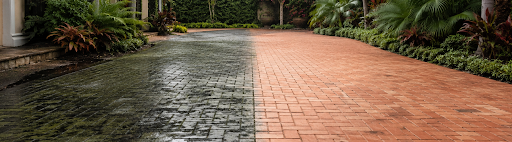
If you have brick surfaces around your home in Martin or St. Lucie County, you already know the frustration. You clean them, they look great for a few weeks, and then the dark streaks, green patches, and black staining start crawling back. You rinse them again. Same result. The cycle never seems to end.
This is not a maintenance failure on your part. It is a climate problem, and Florida’s heat and humidity make it nearly impossible to win this battle without the right approach. Understanding why mold and algae keep coming back, and what real brick pressure cleaning actually involves, is the first step to breaking that cycle for good. Magic Bubbles has helped homeowners across the Treasure Coast do exactly that.
Why Do Mold and Algae Keep Coming Back on My Brick ?
You are not imagining it. Mold and algae do grow back faster on the Treasure Coast than in almost any other part of the country. Florida’s average annual humidity sits at approximately 74.5 percent, making it the most humid contiguous state in the nation. During the rainy season, which runs from roughly May through November, outdoor relative humidity regularly hits 75 to 90 percent.
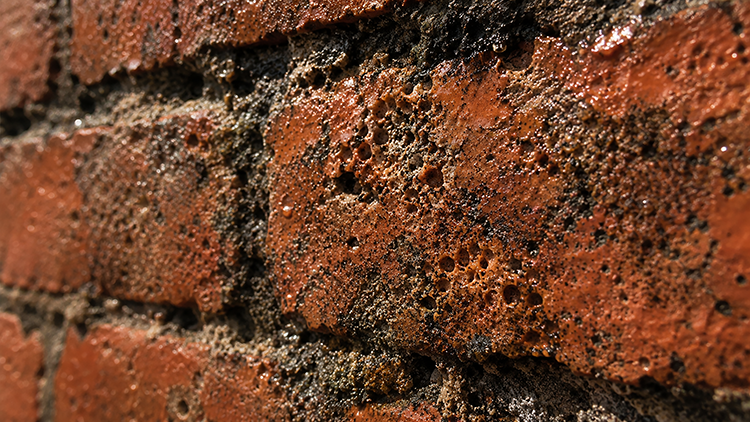
At those humidity levels, mold spores can begin colonizing a surface in as little as 24 to 48 hours after moisture exposure. Warm air holds more water vapor than cool air, and when that moisture-laden air contacts the cooler surface of brick, it condenses and seeps straight into the pores. Brick is a naturally porous material. That texture and absorbency is part of what makes it durable and visually appealing, but it also means water does not just sit on the surface. It goes in.
Once mold, algae, and moss are inside the pores of the brick, they are not on the surface anymore. A garden hose or even a basic pressure rinse removes what you can see, but the root structures of these organisms go deeper. They anchor into the material itself.
So when conditions return to normal, which in Florida happens within days, they resurface quickly.
This is the core reason surface-level cleaning always fails. You are treating the symptom, not the source.
Is Florida’s Climate Really That Different From Other States
For anyone new to the Treasure Coast, the numbers can be surprising. In 2022, an estimated 264,000 mold-related insurance claims were filed in Florida, accounting for more than 20 percent of all home insurance claims in the state. Florida ranks second in the entire country for mold-prone homes, behind only Louisiana.
The combination at work here is specific: temperatures that stay warm enough year-round to prevent any natural die-off, humidity that rarely drops low enough to dry surfaces out completely, and a rainy season that dumps moisture repeatedly across months.
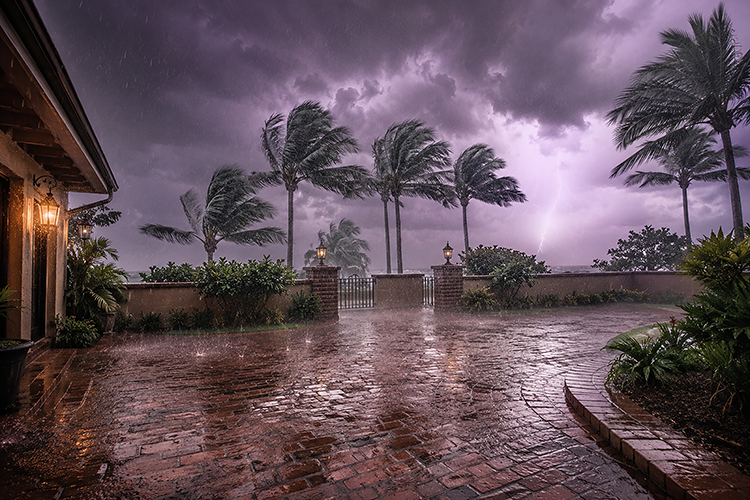
Afternoon thunderstorms are nearly a daily event in summer on the Treasure Coast. Each storm re-saturates brick driveways, patios, walkways, and exterior walls before they have a chance to dry.
Martin and St. Lucie Counties sit in a coastal zone where salt air adds another layer of complexity. Salt residue on brick surfaces holds moisture against the material longer than it would otherwise stay, giving organic growth even more time to take hold between rain events.
What Happens When You Use the Wrong Pressure on Brick
This is where a lot of well-meaning DIY cleaning attempts go sideways. Brick looks tough, and it is, but it has specific structural tolerances.
Most consumer pressure washers sold at hardware stores operate well above that threshold by default, and without experience calibrating the distance, angle, and nozzle type, it is easy to cause damage that is expensive to repair and sometimes impossible to reverse.
The mortar joints between bricks are particularly vulnerable. If the mortar is older or has any existing wear, high-pressure water cuts into it, washes out the binding material, and opens channels where water can get behind the surface. That water then causes deeper structural problems, staining from within, and dramatically faster mold regrowth.
Angle matters just as much as pressure. Water should always be directed downward and away from the surface, not straight into it. A poorly aimed nozzle forces water horizontally into the mortar joints and drives contamination further into the brick rather than removing it.
What Does Professional Brick Pressure Cleaning Actually Involve
Professional brick pressure cleaning is not simply a more powerful version of what you do at home. It is a different process entirely, built around understanding what each specific surface requires.
A trained technician from Magic Bubbles starts by evaluating the brick type, age, and condition. Older brick and soft mortar need lower pressure and more chemical dwell time. Newer brick in good condition can handle a slightly higher pressure stream when needed. This assessment happens before any water is applied.
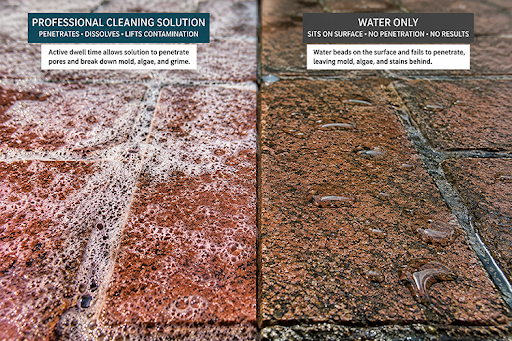
The cleaning process typically combines controlled water pressure with professional-grade cleaning solutions that target organic growth at a biological level. This is not dish soap and bleach. These are formulated products that penetrate porous surfaces, break down mold and algae at the root, and leave behind residual protection that slows regrowth.
The rinse stage matters too. Professionals rinse thoroughly and often multiple times to make sure no cleaning solution residue remains on the brick or in the surrounding soil. Leftover product can cause streaking, surface discoloration, or harm to nearby plant life.
Magic Bubbles brings this full process to brick driveways, patios, pool decks, pavers, and exterior walls across the Treasure Coast. Every surface is treated according to its specific material and condition, not a generic pressure setting applied to everything.
How Does Professional Cleaning Break the Regrowth Cycle
The key difference between a surface rinse and a professional treatment is what happens below what you can see.
When cleaning solutions are applied and allowed to dwell on the brick before rinsing, they penetrate the pores and address the biological organisms living inside the material, not just the staining visible on top. This is sometimes called a pre-treatment approach, and it is standard practice in professional exterior cleaning.
After the treatment and rinse, the brick surface is genuinely clean at a deeper level than a pressure rinse achieves. Many professional treatments also leave a residual effect that inhibits regrowth for a period of time after cleaning, buying the surface significantly more time before the next cleaning is needed.
This is why homeowners who switch from DIY cleaning to professional service often notice a dramatic difference in how long their results hold. The surface was actually cleaned, not just rinsed.
Magic Bubbles also offers maintenance memberships starting at $39 per month, which schedule regular cleanings throughout the year. This approach is particularly well-suited to the Treasure Coast climate because it catches organic growth before it establishes deep roots in the brick, making each cleaning faster and the results longer lasting.
The Safety Issue Nobody Talks About Enough
Beyond property damage, there is a real safety concern that brick staining creates for families and property managers.
Mold and algae on horizontal brick surfaces, such as driveways, walkways, patios, and pool deck surrounds, create slippery conditions that are genuinely hazardous. After rain, these surfaces become significantly more dangerous than clean brick. For households with children or older adults, this is not a cosmetic problem. It is a liability.
Regular professional cleaning eliminates this hazard. Clean brick provides proper traction. Stained and algae-covered brick does not.
Final Takeaways
- Florida’s humidity and year-round warmth mean mold and algae are a permanent environmental pressure on your brick surfaces, not a seasonal inconvenience.
- A surface rinse removes staining but never breaks the regrowth cycle. Only treatment that reaches into the pores of the brick does.
- Using the wrong PSI setting on brick can cause costly structural damage to the brick face and mortar joints.
- Professional cleaning combines the right pressure, the right solutions, and the right technique for each specific surface, delivering results that last far longer than DIY methods.
- Scheduled maintenance cleanings are the most cost-effective way to protect brick surfaces on the Treasure Coast year-round.
Protect Your Brick the Right Way
Living on the Treasure Coast means accepting that the environment works against your property’s exterior every single day. Heat, humidity, rain, and salt air are constants. What you can control is how you respond to them.
Surface-level cleaning keeps the cycle going. Professional brick pressure cleaning breaks it. When the right pressure, the right treatment, and the right technique are applied together, your brick can look clean longer, resist damage better, and stay safer underfoot.
Magic Bubbles provides professional residential pressure washing and soft washing services across Martin and St. Lucie Counties, including Stuart, Palm City, Jensen Beach, Port St. Lucie, Fort Pierce, and surrounding communities. Whether it is your driveway, patio, pool deck, pavers, or exterior walkways, the team brings the knowledge and equipment to clean it correctly the first time, and to keep it looking that way.
Request a free quote at magicbubblestc.com and find out what professional brick cleaning can do for your property.
FAQs About Brick Pressure Cleaning on the Treasure Coast
How often should brick surfaces be professionally cleaned in Martin and St. Lucie Counties?
In this climate, most brick surfaces benefit from professional cleaning every six to twelve months. Driveways and pool deck areas that get regular foot traffic and sun exposure may hold up longer between cleanings, while shaded or north-facing surfaces tend to accumulate growth faster and may need more frequent attention.
Can high-pressure washing cause permanent damage to my brick?
Yes, if done incorrectly. Using too much pressure, the wrong nozzle angle, or holding the wand too close to the surface can cause fretting, delamination, and mortar erosion. This is why hiring a trained professional who knows the right pressure range and technique for brick specifically matters.
Why does my brick look clean right after I rinse it but the stains come back so fast?
Because rinsing removes surface discoloration but not the mold and algae living inside the pores of the brick. The organisms are still there, and they resurface quickly once humidity returns, which in Florida is essentially constant. Professional treatment addresses the growth at a deeper level.

Magic Bubbles
http://magicbubblestc.comMagic Bubbles Pressure Washing is a locally owned Magic Bubbles franchise serving Martin and St. Lucie Counties on Florida’s Treasure Coast. We’re licensed and insured and clean homes and businesses from Stuart, Palm City and Jensen Beach to Port St. Lucie and Fort Pierce. Our posts cover what local heat, humidity and coastal air do to roofs, pavers, pool cages and gutters, and how to keep them looking cared for.