Year-Round Gutter Maintenance Guide for Treasure Coast Homeowners
Key Takeaways
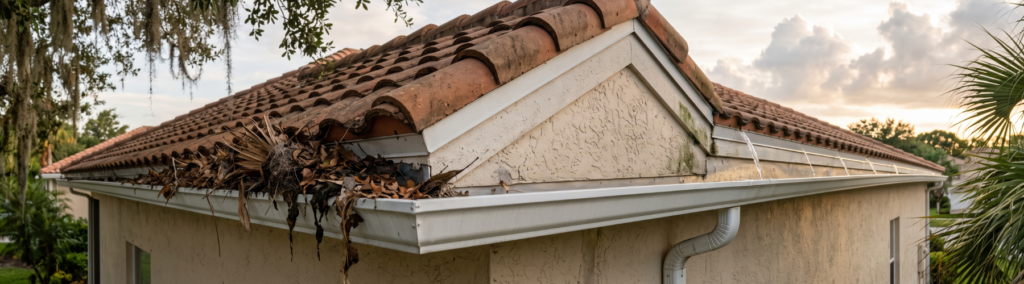
- Treasure Coast homes generate gutter debris almost year-round because of oak leaf drop and palm litter, not just in one seasonal burst.
- The commonly cited “twice a year” cleaning rule was built for inland, four-season climates, and it under-serves coastal Florida homes.
- Pre-hurricane season inspections (May and June) and post-storm checks matter as much as routine seasonal cleaning.
If you own a home in Stuart, Port St. Lucie, Fort Pierce, Jensen Beach, or Palm City, your gutters are working harder than gutters almost anywhere else in the country. Oak leaves and palm fronds fall nearly year-round, afternoon storms roll in for months at a time, and hurricane season adds a level of stress that homeowners in cooler climates never have to think about.
Most gutter advice online is written for someone in Ohio who deals with one big autumn leaf drop and a season of snow. That advice does not hold up here. A gutter system that only gets attention twice a year in Martin or St. Lucie County is a gutter system that is quietly setting up problems: overflow streaks, sagging sections, mold, and even mosquito breeding right along your roofline.
This guide breaks down what actually causes Treasure Coast gutters to clog faster and a month-by-month calendar built specifically for local conditions. Where cleaning goes beyond a quick DIY job, we’ll also point to where professional residential pressure washing and gutter cleaning from Magic Bubbles fits into the picture.
What Makes Gutters on the Treasure Coast Fill Up Faster?
Two trees are doing most of the damage: live oaks and sabal palms. Live oaks are evergreen, but they still drop leaves in a steady trickle throughout the year, with a heavier shed in spring. Sabal palms add dried fronds, seed pods, and fibrous debris that mats down quickly once it gets wet.
Add in roof grit washing down with every rainstorm, and you get a sludge that packs into the corners of your gutters and downspouts. Humidity speeds up decomposition, so what would be dry, crumbly leaf litter up north turns into a dense, water-holding paste here within days.
Homes closer to the Indian River Lagoon or the coast deal with an added factor: salt-laden air, which accelerates corrosion on metal gutter hangers, screws, and seams over time.
Is Cleaning Your Gutters Twice a Year Actually Enough Here?
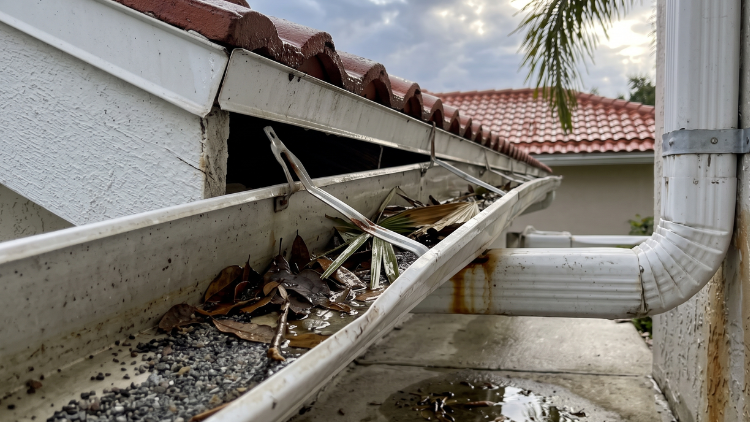
The standard advice is to inspect and clean gutters twice a year and after major storms. That baseline was set for climates with one real leaf-drop season and a quieter rest of the year.
Treasure Coast conditions do not fit that pattern. Between year-round tree litter and a wet season that, according to the South Florida Water Management District, typically runs from mid-May through mid-October and delivers roughly 70 percent of the region’s annual rainfall, gutters here are under near-constant load for almost half the year.
National survey data backs up how often this gets missed. A LeafFilter homeowner survey, reported by ABC17 News, found that 41 percent of homeowners only clean or inspect their gutters once or twice a year, 27 percent wait until a visible problem shows up, and 40 percent have already experienced home damage tied to clogged gutters.
In a climate that adds heavier rain and more tree debris than average, sticking to the minimum leaves even more room for something to go wrong.
For Martin and St. Lucie County homes, a quarterly check, paired with the seasonal triggers below, is a more realistic standard.
Why Does Hurricane Season Change the Whole Gutter Conversation?
The Atlantic hurricane season runs officially from June 1 through November 30, with activity climbing steadily from midsummer and peaking in September, per NOAA’s hurricane climatology data. That stretch also happens to overlap almost exactly with the region’s wet season.
A gutter that is already carrying a partial clog going into June has far less room to handle a tropical downpour. Wind-driven rain during a named storm can dump inches of water in a matter of hours, and a blocked downspout simply cannot move that volume fast enough. The result is water finding the path of least resistance, which is usually straight down your siding or into your soffits.
This is exactly why a pre-season inspection in May, before the first heavy systems arrive, matters more here than almost anywhere else in the country.
A Month-by-Month Gutter Maintenance Calendar for Martin and St. Lucie County Homes
- December through February (dry season lull). Rainfall drops, but oak leaf litter and palm debris keep accumulating. Do a visual check each month and clear visible buildup before it compacts.
- March and April (spring debris increase). Live oaks shed more heavily this time of year. Check downspouts for slow drainage, since this is when partial clogs start to form unnoticed.
- May (pre-hurricane season prep). This is the most important inspection of the year. Fully clear gutters and downspouts, check hangers and fasteners for rust or looseness, and confirm water flows freely away from the foundation.
- June (season start, wet weather begins). Do a follow-up check after the first few significant storms. New debris from wind and rain can undo a clean gutter fast.
- July through September (peak wet season). Check every four to six weeks for mildew streaking on fascia, sludge buildup, and slow drainage. This is also when mosquito activity around standing water tends to spike.
- August through October (storm season peak). Add a post-storm inspection after any named storm or heavy weather event, covered in more detail below.
- November (transition back to dry season). Do a final seasonal clean before rainfall tapers off, and address any fastener or alignment issues while the system is dry and easier to work on.
What to Do After a Storm Passes Through
Wind and heavy rain move debris in ways routine buildup does not. After a storm, walk the perimeter of your home and look for:
- New clogs from wind-blown leaves, twigs, or small branches lodged in the gutter or downspout.
- Sections that have pulled away from the fascia or sagged under the extra weight of storm debris.
- Granule buildup washed down from the roof, which can be a sign of roofing wear worth noting separately.
- Standing water still sitting in the trough more than a day or two after the rain stops.
That last point matters more than it might seem. The CDC recommends removing standing water on a weekly basis from anything that can hold it, since mosquito eggs need still water to develop into biting adults. A gutter that holds water for several days after a storm is functioning as exactly that kind of breeding site, right at your roofline.
Why Professional, Insured Gutter Cleaning Is the Safer Scheduled Option
Climbing a ladder along a wet, algae-streaked roofline several times a year carries real risk, and it is easy to underestimate how often that ladder needs to come out once you account for Treasure Coast conditions honestly.
Magic Bubbles offers gutter cleaning as part of its residential services, alongside house washing, roof soft washing, driveway and paver cleaning, and patio and pool deck cleaning, so the same black streaking or algae buildup on fascia, siding, or roofing can be scheduled and handled by the same local team.
For homeowners who would rather not track a seasonal calendar themselves, Magic Bubbles also offers membership plans, with scheduled annual or semi-annual service across roofs, driveways, patios, and gutters.
All work is performed by a licensed and insured team serving Martin and St. Lucie County communities, including Stuart, Palm City, Jensen Beach, Port St. Lucie, and Fort Pierce.
Final Takeaways
- Put a May pre-hurricane inspection and a post-storm check on your calendar now, rather than waiting for the first overflow to remind you.
- Treat overflow streaks, algae on fascia, sagging sections, or standing water as an action signal, not a cosmetic detail to deal with later.
- Quarterly attention fits Treasure Coast conditions far better than the generic twice-a-year rule.
Protect Your Home Through Every Season
Gutter maintenance on the Treasure Coast is not a once-and-done chore. Between oak and palm litter, a long wet season, and a hurricane season that overlaps with both, your gutters need a schedule built around local conditions, not a generic national checklist.
Whether you handle the seasonal checks yourself or bring in a professional team for the harder or higher-risk work, the goal is the same: water moving away from your home the way it is supposed to, all year long. Magic Bubbles provides licensed, insured residential gutter cleaning alongside house washing, roof soft washing, and other exterior services across Martin and St. Lucie County, with free quotes available for homeowners ready to get started.
Frequently Asked Questions
How often should I clean my gutters in Martin or St. Lucie County?
A quarterly check is a realistic baseline here, with dedicated attention in May before hurricane season and again after any major storm. Homes with heavy oak or palm coverage may need more frequent attention than that.
Do I need to clean my gutters before hurricane season even if they look fine from the ground?
Yes. Partial clogs and sludge buildup are often invisible from ground level but still slow drainage enough to cause overflow once heavy rain arrives. A May inspection catches problems before the season’s rainfall tests the system.
Is DIY gutter cleaning a good idea for a two-story home?
It can be done, but the risk goes up significantly with roofline height, and wet or algae-covered gutters add slip risk on the ladder itself. Many homeowners choose to have a professional, insured crew handle taller or harder-to-reach sections.