Low Pressure Roof Cleaning: The Safest Way to Remove Algae, Moss, and Stains
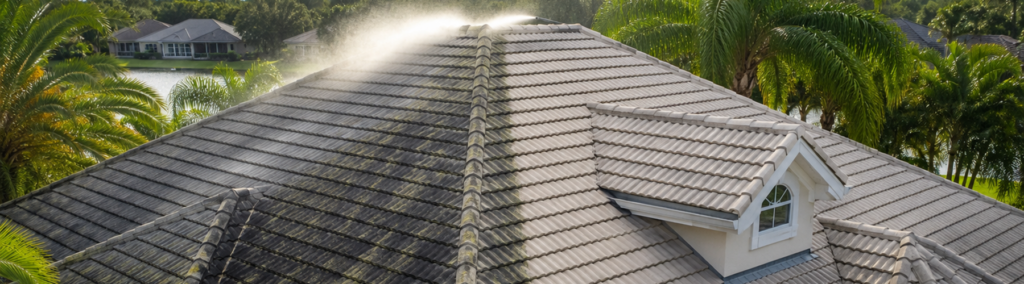
Key Takeaways
- Black streaks, green moss, and algae are caused by living organisms that grow on your shingles and cause real structural damage over time.
- Low pressure roof cleaning (soft washing) removes these organisms safely without stripping granules or voiding your roof warranty.
- High-pressure washing on roofs can cause hidden damage that shortens the life of your shingles significantly.
- Professional soft washing uses EPA-approved cleaning agents that kill organisms at the root, preventing faster regrowth.
Your roof is one of the most valuable parts of your home, and it takes a beating every single day. In South Florida, that beating is especially harsh. The combination of humidity, heat, and seasonal rain creates perfect conditions for algae, moss, and stubborn black streaks to take over your roof. Left untreated, these growths do not just look bad. They quietly eat away at your shingles and cut years off your roof’s life.
The good news is that there is a smarter, safer way to clean your roof without causing damage. Low pressure roof cleaning, also called soft washing, uses the right combination of water pressure and professional cleaning solutions to remove harmful growth at the root level.
If you have been wondering whether your roof needs cleaning, or if you are unsure which method is actually safe to use, this guide will walk you through everything you need to know.
What Causes Those Black Streaks and Green Stains on Your Roof
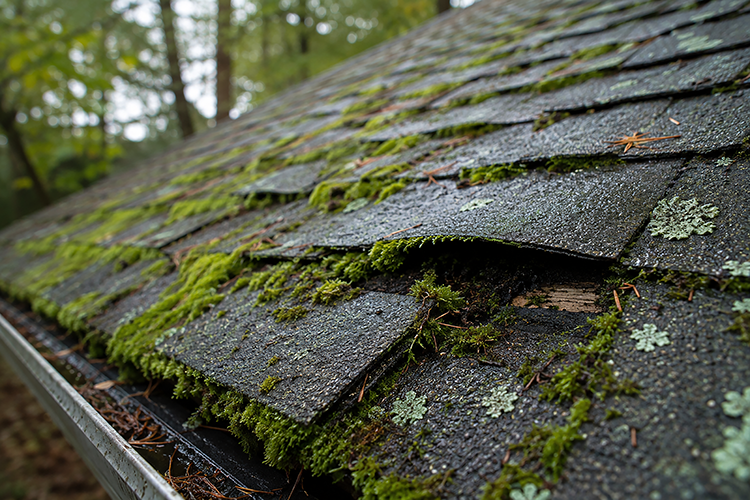
Most homeowners assume those dark streaks are just dirt or pollution buildup. In reality, they are almost always caused by a specific cyanobacteria called Gloeocapsa magma. This organism thrives in warm, humid climates, which makes the Treasure Coast region a perfect breeding ground for it.
The dark pigment those streaks carry is actually the bacteria protecting itself from UV rays. It spreads from roof to roof through airborne spores, meaning your neighbors’ roofs can re-infect yours if treatments are not applied correctly.
Moss is a different but equally damaging problem. Moss spreads across shingles in thick green mats, especially in shaded areas of the roof. Over time, moss works its way under shingle edges, lifting them and allowing water to seep into your roof deck. Research published by Oregon State University Extension notes that moss physically clings to shingles and that environmental conditions, particularly shade and moisture, determine how aggressively it returns after cleaning.
Lichen is the third common culprit. It forms a hard, crusty bond directly with your shingles and is the hardest of all to remove. Trying to scrape or blast it off causes more damage than the lichen itself. This is exactly why low pressure cleaning methods paired with the right chemical treatments are the only responsible approach.
How Does Low Pressure Roof Cleaning Actually Work
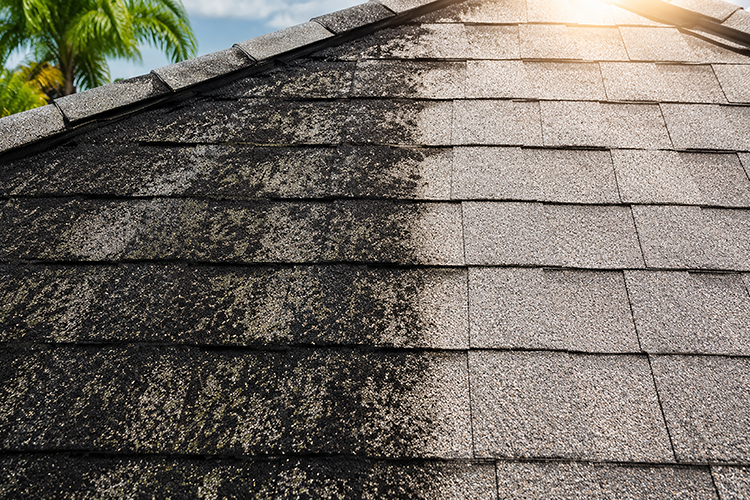
Low pressure roof cleaning, widely known as soft washing, relies on low water pressure combined with professional-grade cleaning solutions to do the heavy lifting. The process is straightforward but requires the right equipment, the right chemicals, and the right technique to be effective.
Here is how it works in practice. A professional team applies a biodegradable cleaning solution to the entire roof surface. This solution typically contains sodium hypochlorite at a controlled dilution, combined with surfactants that help the solution cling to the surface and penetrate deep into the growth. The solution kills algae, moss, mold, and mildew at the root level rather than just washing the surface clean temporarily.
After a short dwell time to let the solution work, the roof is rinsed using low pressure water, typically delivered at 100 PSI or less. For comparison, a standard garden hose runs at around 40 to 60 PSI, while pressure washers commonly used for concrete can exceed 3,000 PSI. Soft washing stays gentle enough to rinse the surface clean without disturbing granules or lifting shingles.
At Magic Bubbles, this is the only method we use on roofs. It delivers thorough results that last longer than aggressive pressure washing because the biological growth is eliminated rather than just displaced.
Is Pressure Washing Actually Dangerous for Your Roof
This is one of the most important questions homeowners ask, and the honest answer is yes. High-pressure washing is genuinely harmful to most residential roofing materials when used incorrectly or at excessive force.
Asphalt shingles are coated with granules that serve two purposes: they protect the underlying mat from UV damage, and they add a layer of fire resistance. When high-pressure water hits those granules, it strips them away. Granule loss accelerates aging, reduces UV protection, and voids many manufacturer warranties. You may not see the damage immediately, but you will feel it when your roof ages years faster than it should.
The ARMA explicitly advises against using high-pressure washing on asphalt shingles. Their guidelines recommend low-pressure chemical treatments as the safest method for removing biological growth. Ignoring this guidance can result in damage that is not covered under your roofing warranty, leaving you fully responsible for costly repairs or early replacement.
Tile roofs face similar risks. High pressure can crack tiles, dislodge them, and force water underneath the surface layer, creating moisture problems that lead to mold inside your attic. Metal roofs can also be scratched or have protective coatings removed. The bottom line is that no common residential roofing material truly benefits from high-pressure water application.
Why Do Algae and Moss Come Back So Quickly After Cleaning
If you have had your roof cleaned before and noticed the stains returning within a year or two, the method used was likely the problem. Surface-level cleaning, whether done with a brush, a pressure washer, or a basic rinse, removes visible growth but leaves behind spores and root structures embedded in your shingles. Those remnants are essentially a head start for regrowth.
Low pressure soft washing is specifically designed to prevent this. The biocidal cleaning agents used in professional soft washing kill the organisms completely, including the spores and hyphae that standard washing leaves behind. Studies conducted by roofing industry organizations have shown that properly applied soft washing treatments can inhibit regrowth for one to three years or longer, depending on local climate conditions and the level of surrounding tree cover.
The Treasure Coast’s climate creates favorable conditions for faster regrowth compared to drier regions, which is why we often recommend adding a post-treatment protective rinse and scheduling routine maintenance checks. Staying ahead of the growth cycle is far more cost-effective than waiting until heavy staining or moss buildup requires a more intensive cleaning session.
What to Expect from a Professional Soft Washing Service
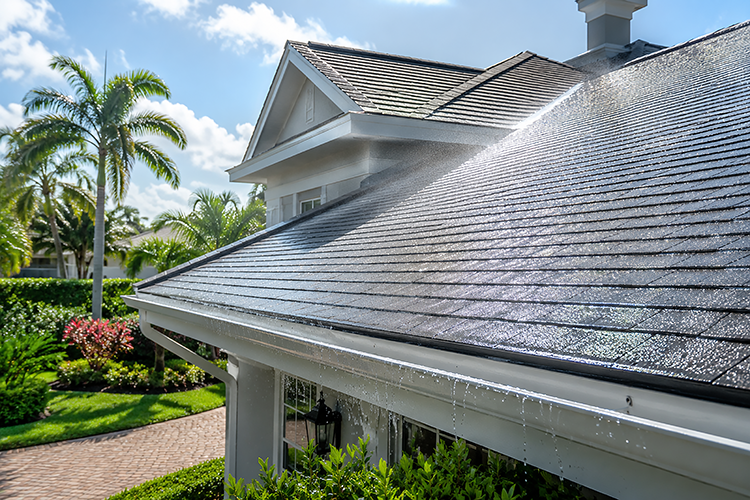
When you schedule a low pressure roof cleaning with Magic Bubbles, the process is designed to be thorough, efficient, and respectful of your property. Here is what a typical residential soft washing job looks like from start to finish.
Before any solution is applied, our team does a full inspection of your roof to identify areas of heavy biological growth, any pre-existing shingle damage, and sections that may need extra attention. We also take steps to protect your landscaping, gutters, and surrounding surfaces before the cleaning solution is applied.
The cleaning solution is applied evenly using low-pressure spray equipment. Dwell time is monitored carefully to ensure the treatment is effective without over-saturating the surface. The rinse phase uses controlled low-pressure water to remove all residue cleanly. The entire process for a standard residential roof typically takes two to four hours, depending on size and condition.
Beyond roofs, Magic Bubbles offers a full range of exterior cleaning services for homeowners and property managers across the Treasure Coast, including driveway washing, patio and paver cleaning, fence washing, and commercial exterior maintenance.
Choosing the Right Roof Cleaning Professional in Martin and St. Lucie Counties
Not every exterior cleaning company is equipped to perform safe low pressure roof cleaning. It is worth asking a few direct questions before you hire anyone to work on your roof.
First, ask whether they use soft washing or high-pressure methods on roofs. If a company tells you pressure washing is fine for any type of roof, that is a serious warning sign. Second, ask what cleaning solutions they use and whether those products are biodegradable.
Professional-grade soft washing should not pose a risk to your plants, pets, or nearby water sources when applied correctly.
Third, verify that the company is licensed and insured for roof work in Florida. Roof cleaning involves working at height, and any legitimate professional service should carry appropriate liability coverage. Finally, ask about their experience with your specific roofing material, whether that is asphalt shingle, concrete tile, clay tile, or metal.
Magic Bubbles has served homeowners and property managers throughout Martin and St. Lucie Counties with professional soft washing services that prioritize both results and roof safety. Our team understands the specific challenges that South Florida’s climate presents, and we tailor every job to the conditions we find on site.
Final Takeaways
- Soft washing kills roof organisms at the root level, meaning results last significantly longer than surface-only cleaning methods.
- High-pressure washing on asphalt shingles strips granules, accelerates aging, and can void your manufacturer’s warranty.
- Choosing a licensed, insured professional with soft washing experience protects both your roof and your investment.
Your Roof Deserves Better Than a Pressure Wash
A clean roof is not just about curb appeal. It is about protecting one of the most expensive components of your home from organisms that feed on it silently and steadily. Low pressure roof cleaning gives you a way to remove that threat completely, safely, and with results that actually hold up over time.
The choice between soft washing and high-pressure cleaning is not really a close call when you understand what is at stake. One method works with your roofing material to extend its life. The other works against it.
If you are a homeowner or property manager in Martin or St. Lucie County and your roof has not been professionally cleaned in the last year or two, now is a great time to schedule an assessment. Magic Bubbles brings professional soft washing expertise, the right equipment, and a genuine commitment to protecting your property. Reach out today and give your roof the care it deserves.
Frequently Asked Questions
How often should I have my roof soft-washed?
For most homes in the Treasure Coast area, a professional low pressure roof cleaning every one to two years is a reasonable maintenance schedule. Homes with significant tree cover or heavy shade may need more frequent cleaning since those conditions promote faster biological growth.
Will soft washing damage my plants or garden?
When performed by a trained professional, soft washing is safe for the surrounding landscaping. At Magic Bubbles, we pre-wet plants and ground cover around your home before applying any cleaning solution, and we rinse the area thoroughly after the job is complete. We use biodegradable cleaning agents that break down quickly after contact.
Can I use low pressure cleaning on a tile or metal roof?
Yes. Soft washing is appropriate for virtually all residential roofing materials, including asphalt shingles, concrete tile, clay tile, and metal. The pressure settings and chemical concentrations may be adjusted slightly depending on the material, which is one reason professional service matters more than a DIY approach.
How long does low pressure roof cleaning take to show results?
In most cases, you will see an immediate improvement after the rinse phase. Some heavy algae staining may take a few days to fully fade as the treatment continues working after application. Moss may also require a follow-up inspection a few weeks later, as dead moss can sometimes cling to shingles briefly before releasing completely.

Magic Bubbles
http://magicbubblestc.comMagic Bubbles Pressure Washing is a locally owned Magic Bubbles franchise serving Martin and St. Lucie Counties on Florida’s Treasure Coast. We’re licensed and insured and clean homes and businesses from Stuart, Palm City and Jensen Beach to Port St. Lucie and Fort Pierce. Our posts cover what local heat, humidity and coastal air do to roofs, pavers, pool cages and gutters, and how to keep them looking cared for.