How Often Should You Clean Your Home’s Exterior in Martin & St. Lucie County?
Key Takeaways
- Most exterior surfaces need cleaning every 6 to 12 months in Florida’s climate, more often near the coast or under heavy tree cover.
- Roofs, siding, driveways, and pavers each have different cleaning needs based on material and sun exposure.
- Black streaks, green algae, and slippery spots are early warning signs, not just cosmetic issues.
- Waiting too long turns a simple wash into permanent staining, surface damage, or costly repairs.
- A scheduled cleaning plan is almost always easier to manage than reactive, one-time deep cleaning.
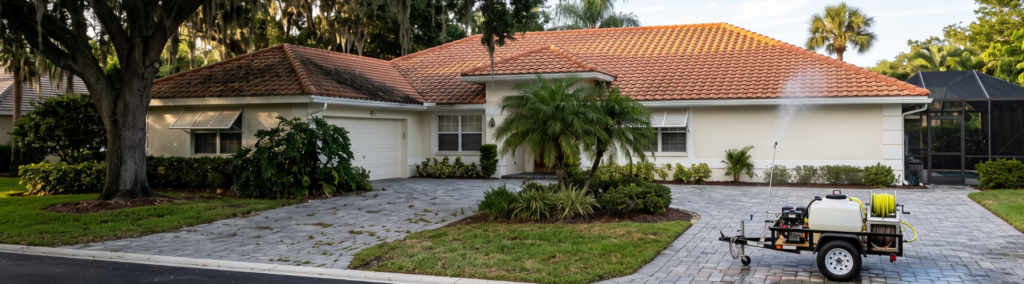
If your roof has black streaks, your driveway feels a little slick after rain, or green patches keep creeping across your pavers, you are not imagining it. Homes on the Treasure Coast get dirty faster than homes in most of the country. Between the humidity, the salt air rolling in from the coast, and the shade from all those oak and palm trees, Martin and St. Lucie County properties are in a constant, low-grade battle against mold, algae, and grime.
The good news is that there is a clear answer to “how often should I clean my home’s exterior?” It just depends on which surface you are asking about. Below, we break down a realistic cleaning schedule for every part of your property, the warning signs that mean you have waited too long, and how Magic Bubbles Pressure Washing helps homeowners and property managers stay ahead of it, instead of scrambling to catch up.
How Often Should You Clean Your Roof, Siding, and Gutters?
Roof: Most tile, shingle, and metal roofs fall within the general 6 to 12 month cleaning window Magic Bubbles recommends for Florida homes. Homes with heavy tree cover or a north-facing roofline (the shadiest, dampest spot for algae) tend to need attention closer to the shorter end of that range. Soft washing, not high-pressure washing, is the safe method for shingles and tile, since it removes algae without stripping granules or damaging the roofing material.
Siding and stucco: exterior walls collect the same mold, mildew, and dirt as your roof, just at a slower pace. A house wash within that same general 6 to 12 month window keeps stucco, vinyl, and painted siding looking fresh and helps paint or coatings last longer.
Gutters: these deserve extra attention beyond a standard schedule, especially before and during Florida’s rainy season. Clogged gutters overflow, and that overflow runs straight down your siding, creating fresh streaking and moisture damage on the areas you just cleaned.
How Often Should Driveways, Patios, Pool Decks, and Pavers Be Cleaned?
Driveways and walkways: concrete and pavers sit low to the ground and stay damp longer, so algae and tire stains build up quickly. Cleaning every 6 to 12 months keeps these high-traffic surfaces from turning green or black.
Patios and pool decks: these areas combine constant moisture (splashing, sprinklers, rain) with limited airflow, which is exactly what algae wants. Plan on cleaning every 6 to 12 months, more often for shaded pool decks or covered lanais.
Pavers, fences, and screen enclosures: pavers benefit from periodic cleaning and sealing, since sealing helps lock in color and slow future staining. Fences and screen enclosures collect pollen, dirt, and mildew quickly in this climate and typically need a wash every 6 to 12 months as well.
What Warning Signs Mean It’s Time to Clean Now?
Black streaks on your roof: these dark, spreading marks are colonies of algae, not just dirt. Left alone, they spread across the roof and start affecting how well your shingles reflect heat.
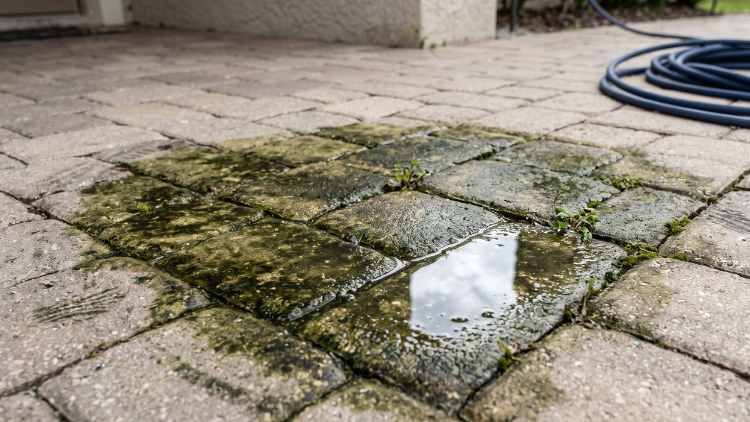
Green or slimy patches on driveways, patios, or pavers: that green tint is algae, and once it appears, the surface underneath is often already becoming a slip hazard.
A musty smell or visible mildew near windows, vents, or shaded corners usually signals moisture sitting somewhere it should not be.
If you are noticing any of these signs, treat it as your cue to clean, regardless of when the surface was last done.
The Real Cost of Waiting Too Long
Algae and mold do not just sit on the surface, they feed on it. Left untreated, Gloeocapsa magma feeds on the limestone filler in asphalt shingles, gradually breaking down granules and shortening a roof’s lifespan. What starts as a cosmetic streak can turn into a costly repair.
On pavers and concrete, algae stains that sit for too long often become permanent and no longer lift with a standard wash. What would have been a routine cleaning turns into a much more intensive restoration job.
For property managers, the math is even simpler. A stained, neglected exterior across multiple units or common areas affects tenant satisfaction and property value at scale, not just on one home.
Building a Cleaning Schedule That Fits Your Property
Every property is a little different. A home tucked under heavy oak trees in Palm City will need more frequent attention than a sun-exposed property in Port St. Lucie. A rental managed by a property manager across several units needs predictable, budget-friendly scheduling more than a one-off deep clean.
That is why Magic Bubbles offers both one-time services and membership plans. A membership bundles services like roof soft washing, driveway and walkway cleaning, house washing, gutter cleaning, and more into a recurring schedule (typically annual or semi-annual, depending on the surface), so you are never guessing when it is time to clean again.
Instead of waiting for black streaks or a slippery patio to remind you, a scheduled plan keeps buildup from becoming a problem in the first place, and it tends to be simpler to manage than booking one-time cleanings whenever things start looking bad.
Why Professional Cleaning Beats DIY for Lasting Results
A rented pressure washer can seem like an easy fix, but the wrong pressure or technique on a roof, stucco wall, or paver joint can cause real damage: stripped shingle granules, disturbed paver sand, or paint that lifts right off the wall.
Magic Bubbles uses soft washing for delicate surfaces like roofs, siding, and stucco, and adjusts pressure by material for driveways, pavers, and pool decks. The goal is always the same: remove the mold, algae, and grime without damaging what’s underneath.
For homeowners, that means peace of mind. For property managers, it means consistent, professional results across every property on the list, without training staff or maintaining equipment in-house.
Final Takeaways
- Do not wait for visible damage; black streaks, green patches, and slippery spots mean it’s already time to clean.
- Match the method to the surface: soft washing for roofs and siding, adjusted pressure for driveways and pavers.
- Coastal salt air and tree coverage mean Martin and St. Lucie County homes often land on the shorter end of the 6 to 12 month range.
- A scheduled membership plan removes the guesswork and keeps buildup from turning into a bigger repair.
Conclusion
Your home is up against a tougher climate than most. Between the humidity, the salt air, and the shade, mold and algae have every advantage on the Treasure Coast, unless you stay ahead of them.
A clear cleaning schedule, tailored to your roof, siding, driveway, and every other surface, is one of the simplest ways to protect your property’s value and keep it safe for the people who use it. Magic Bubbles Pressure Washing has been helping homeowners and property managers across Martin and St. Lucie County do exactly that, using soft washing and pressure washing methods suited to Florida’s surfaces.
If it has been a while since your last cleaning, or you’re not sure where to start, request a free quote or ask about a membership plan. Either way, staying ahead of buildup is almost always easier than catching up on it.
FAQs
How often should I clean my home’s exterior in Florida?
Most surfaces on the Treasure Coast benefit from cleaning every 6 to 12 months. Roofs can often stretch to 12 to 18 months unless they sit under heavy tree cover, while driveways, patios, and pool decks tend to need attention closer to every 6 months.
Is pressure washing safe for my roof and pavers?
Yes, when it’s done correctly. Roofs need gentle soft washing to avoid stripping shingle granules, while pavers and concrete can typically handle pressure washing adjusted to the material to avoid disturbing sand joints.
What happens if I wait too long to clean my home’s exterior?
Algae and mold can cause permanent staining, accelerate surface wear, and lower curb appeal. On roofs specifically, prolonged algae growth can shorten the lifespan of your shingles.

Magic Bubbles
http://magicbubblestc.comMagic Bubbles Pressure Washing is a locally owned Magic Bubbles franchise serving Martin and St. Lucie Counties on Florida’s Treasure Coast. We’re licensed and insured and clean homes and businesses from Stuart, Palm City and Jensen Beach to Port St. Lucie and Fort Pierce. Our posts cover what local heat, humidity and coastal air do to roofs, pavers, pool cages and gutters, and how to keep them looking cared for.